Bunting for Birthdays: Age, Theme, and Color Ideas
Bunting does one job better than almost any other party decoration: it announces the occasion the second someone walks in. It fills the blank wall above the cake table, frames a doorway, and turns a plain garden fence into a backdrop for photographs. It also carries information — a number, a name, a set of colours — that guests read before they have taken off their coats. The trick is choosing that information deliberately. A first birthday and a fiftieth deserve very different flags.
Age Is a Design Brief
The number on your bunting sets the tone as much as the cake does. A bright primary-coloured "3" cut from card reads as playful and cheap in the best sense. The same "3" in brushed gold card reads as a photo-studio prop. Neither is wrong, but you have to pick one.
Not every birthday needs a giant numeral. For adults who would rather not advertise the figure, a repeated small number across a long string looks stylish and does the same job. For children who are desperate to be a year older, go big: the number should be the largest thing on the wall. Milestone years — 1, 5, 10, 13, 16, 18, 21, 30, 40, 50, 60 and beyond — are the ones guests expect to see marked, so make those flags the focal point and keep the rest of the decoration quieter.
Bunting Ideas by Age Group
First birthday
Soft colours work best: dusty blue, sage, blush, cream, with a single large "1" centred above the cake table. A photo line is the most popular choice for a reason — print one picture from each month, clip them to a ribbon with mini pegs, and hang the line at adult eye level so guests can actually see the faces. Keep anything precious above grabbing height; a crawling baby will treat low-hanging paper flags as a snack.
Ages two to five
Go bright and go high. Primary colours, animal shapes, chunky lowercase letters spelling the child's name. Toddlers pull, so use ribbon rather than thread and hang the lowest point well above head height. Simple shapes — stars, balloons, ice cream cones — cut from card in one strong colour are more effective than a busy character print.
Six to twelve
By this point the birthday child has opinions, so ask. Space, dinosaurs, football, unicorns, gaming, sharks — the theme will be obvious and the bunting should follow it. A personalised name string plus a separate "Happy Birthday" string is enough for a room; add a themed cut-out string for the party table if you want more. Let them help cut the flags and they will defend the decorations all afternoon.
Teenagers
Less is more. Neon card, black and metallic, or a single banner with a big number and fairy lights wrapped around it. A photo timeline works especially well here — a handful of pictures from birth to now, strung across a wall, silently tells the story without a speech. Skip the cutesy pastel triangles; they will be quietly resented.
Eighteen, twenty-one and thirtieths
Bold and adult: black and gold, deep green and brass, terracotta and cream. If the celebration is at a venue, check whether you are allowed to hang anything at all, and bring removable hooks and fishing line just in case.
Fortieths and beyond
Fabric bunting is worth the extra money here — cotton or felt flags can be reused for years and look better in photographs than shiny card. Classic palettes, larger readable lettering, and a garden setting if the weather allows. Naming grandchildren or children on the strings is a warm touch without being sentimental.
Matching Bunting to the Party Theme
If you already have a theme, the bunting should borrow from it rather than sit awkwardly beside it. Some pairings that always look intentional:
- Tropical or luau: palm and monstera leaf cut-outs, flamingo pink, leaf green, a few paper pineapples.
- Space: black card flags, silver foil letters, star shapes, and a "3 – 2 – 1" countdown string.
- Dinosaur: green and brown triangles, footprint flags, one flag with a friendly "Roar".
- Retro diner: red, white and teal pennants with polka dots and check patterns.
- Garden tea party: floral cotton flags, gingham ribbon, pastel triangles.
- Disco or neon: matte black flags with neon card letters and a few mirrored shapes.
- Book or film theme: match the colours of the cover or poster and keep the shapes simple.
The same rule applies in reverse. If the cake, the tablecloth and the invitations are already busy, plain bunting in two colours will hold the whole thing together.
Choosing a Colour Palette
Two or three colours plus a neutral is the sweet spot. Add one metallic if you want a bit of shine, and repeat the palette in at least three places — bunting, balloons, napkins, cake — so it reads as a scheme rather than a coincidence.
A palette works when it repeats. Two colours and a neutral used three times will look more deliberate than six colours used once each.
Test your colours in the actual room before you commit. Warm bulbs turn pale pinks peachy and cool whites greenish, and fabric looks very different in daylight than it did on a screen. Hold a flag against the wall you plan to hang it on, then take a photo. If it still looks good in the photo, it will look good in the room.
Where to Hang It, and How High
Bunting is not just a rectangle above a table. Spread it around the space and let it do different jobs in different places.
- Pick two or three anchors. Behind the cake table, across a doorway, above the gift table, or along a garden fence. Three focused runs look better than one string stretched around the whole room.
- Measure before you cut or buy. Add roughly a fifth to the straight distance to allow for the sag, then add extra at both ends for tying.
- Hang high, vary the height. A run at head height above a doorway plus a lower swag across a wall gives the space depth.
- Use the right fixings. Removable adhesive hooks, string tied to existing rails, or fishing line for a floating look. Never hang anything from light fittings, smoke detectors or sprinkler heads.
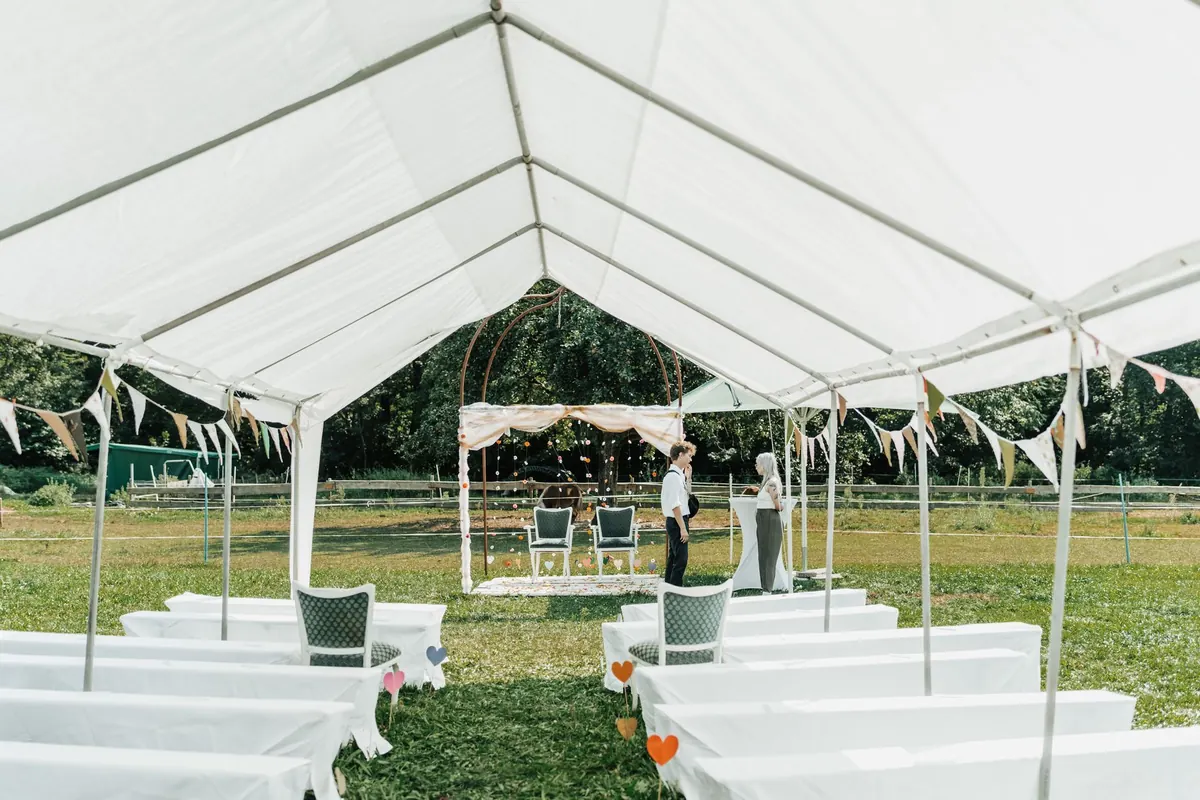
- Outdoors, plan for wind. Thread the line through grommets or folded-over fabric, tie off tightly at both ends, and avoid gaps where the flags can flip over and tangle.
Keep paper bunting well clear of candles, sparklers and anything else with a flame. It is a sensible rule that saves a lot of apologies.
Buy, Make or Reuse
Card flags are quick, cheap and hold a crisp shape, but they crease and sag in damp air. Cotton, felt and hessian flags cost more, hang better and can be washed. If you are making your own, cut triangles with pinking shears so the edges do not fray, leave a channel or fold at the top, and stitch or thread them onto ribbon or bias tape. Reuse is where fabric bunting wins: store each set in a labelled zip bag with the theme and the colours written on it, and you will build a small library over a few years.
Before You Hang a Single Flag
Decide on one number or name, one palette, and two or three places the bunting will go. Cut or buy to those measurements, keep a spare metre of ribbon in your bag, and step back to check the effect from where guests will actually stand — usually the front door and the cake table. Ten minutes of planning beats an afternoon of rehanging, and the flags will still be waiting next year.
Photo: Fotownetrza / Pixabay