Eco-Friendly Bunting: Materials, Printing, and Disposal Explained
Bunting is the quickest way to turn a plain room into a party. One line of triangles across a kitchen window, a few flags above the cake table, and the space has a mood. The trouble is that a lot of what sells cheaply is plastic pretending to be paper: laminated card, foil-stamped letters, glitter that sheds onto the carpet and stays in the carpet for months. The good news is that bunting is one of the easiest decorations to get right, whether you buy it or sew it. Three decisions do most of the work: the material, the printing, and what happens to it afterwards.
What Actually Makes Bunting Eco-Friendly
There is no single label to look for, and a "green" sticker on a packet is worth less than the ingredients list on the back. In practice, bunting is a good choice if it is made from a material that can be recycled, composted, or reused for years, and if it doesn't lean on plastic coatings, glitter, or solvent-heavy inks to look festive.
Two things quietly undo good intentions: lamination and glitter. A paper flag with a plastic film on the front cannot be recycled with paper, and glitter is almost always plastic film cut into tiny pieces, which means it ends up in waterways, on beaches and in compost. Anything that sparkles, shimmers or feels slightly plasticky to the touch is worth leaving on the shelf.
Recycled Paper and Card
Paper bunting is the simplest option and the cheapest to make at home. Look for uncoated card described as recycled or post-consumer recycled, and check the weight: somewhere around 250 to 300 gsm holds a crease and hangs stiffly without sagging, while thin printer paper flutters into a sad curl by the second hour.
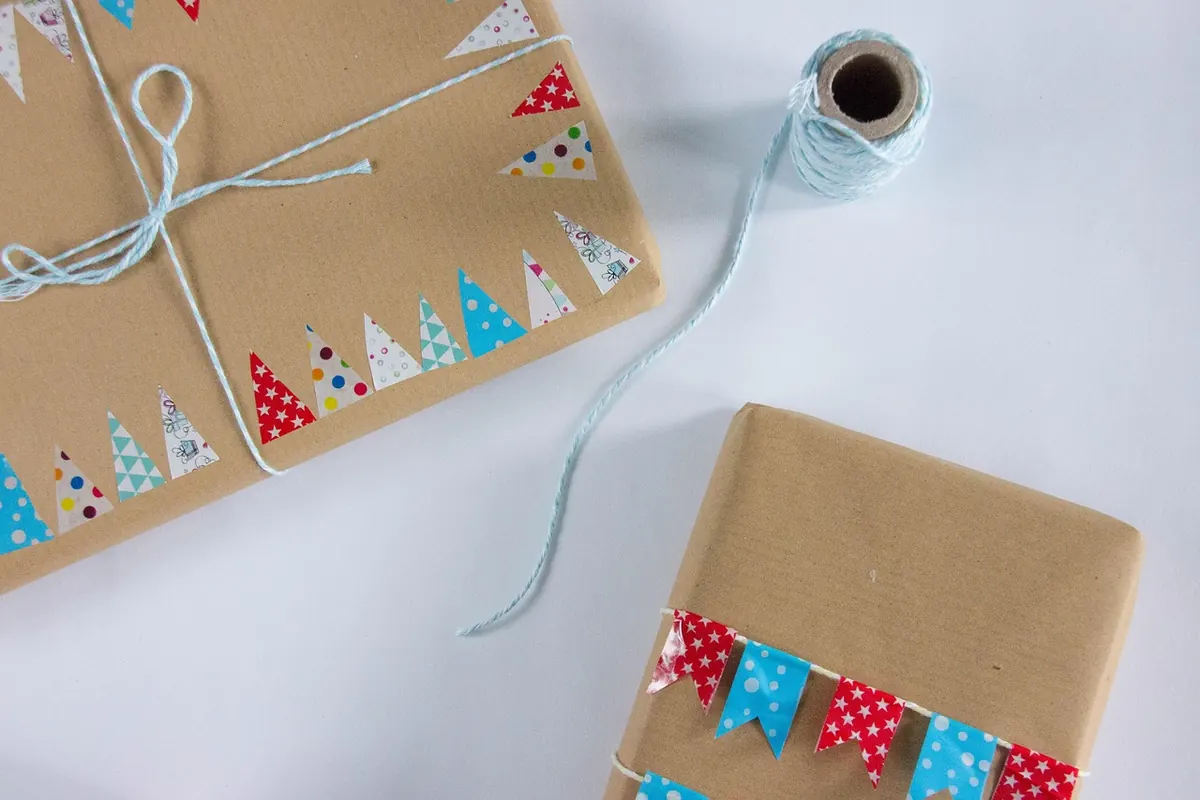
Brown kraft card has an advantage that is easy to overlook: it looks intentional. Left plain with a string of jute, it reads as rustic rather than unfinished. Old greetings cards, wallpaper samples, cereal boxes and the covers of finished notebooks all make perfectly good flags, and cutting them up costs nothing.
Watch the edges. A punched hole needs reinforcing with a small circle of tape or a dab of glue on the back if you plan to reuse the bunting, otherwise the string saws through the card within a party or two. That single step is the difference between a one-use garland and one that comes out every birthday for five years.
Natural Fabrics, Bought Once and Kept
Fabric bunting costs more upfront and outlasts everything else. Cotton, linen, jute, hemp and wool felt are the materials to look for. Polyester satin and polyester felt are the ones to avoid, mainly because they shed microplastics every time they are washed and they will not break down at the end of their life.
You do not need to buy new fabric. Old shirts, worn bedsheets, curtains, tablecloths and offcuts from a sewing project all cut into neat triangles. If you are buying, secondhand fabric shops and remnant bins are usually the best value.
A few construction details make a real difference to how long the bunting survives:
- Use pinking shears or a zigzag stitch on the long edges of each triangle to slow fraying.
- Sew the flags into a strip of bias binding or wide ribbon rather than threading them on a string, so they stay evenly spaced.
- Choose natural thread if you might compost the bunting later, since polyester thread will not break down.
- Leave a generous loop at each end so the bunting can be tied around beams and banisters without straining the first flag.
Printing and Dyeing Without the Plastic Sheen
Printing is where most eco-friendly intentions get lost. The standard options for decorating a flat surface are solvent-based inks, vinyl heat transfer, and glitter, and all three add plastic or volatile compounds to a material that was otherwise clean. Water-based and plant-based inks are the lower-impact choice, and they work well on both paper and fabric.
If you are printing at home, keep it simple. Rubber stamps with water-based ink pads, block printing with fabric-safe ink, or hand-painted lettering with textile paint all give a cleaner finish than an iron-on transfer and take about the same amount of time.
Natural dyeing is worth exploring if you enjoy the process: onion skins, tea, coffee, avocado stones and turmeric all give colour, though the results are softer and less predictable than commercial dyes. Be aware that turmeric fades quickly in sunlight and that natural dyes will shift over time. If you want a sharp, repeatable colour, hand-painted textile paint on natural fabric is the more reliable route.
A note on glitter
There is no such thing as a truly eco-friendly party glitter in the sense most people hope for. Biodegradable versions exist, but they still need specific conditions to break down, and they are easy to confuse with plastic glitter in a shop. Stamping, stencilling, embroidery and appliqué all add texture without leaving a trail of microplastics in the garden.
Making It Last Is the Biggest Win
The greenest bunting is the bunting you already own. A cotton or card garland used ten times has a far smaller footprint than ten paper versions bought and binned. Store it flat in a box or rolled around a cardboard tube, not crumpled in a bag, and label the box with what is inside so you are not buying a replacement because you forgot you had one.
Wash fabric bunting in cool water and let it air dry. Hot washes shrink cotton and soften the fabric so the flags flop. Jute should not go in the machine at all. If a flag tears, replace that single triangle rather than the whole string, and keep a small stash of matching fabric for repairs.
Disposal: Where Each Type Should Go
How you dispose of bunting depends entirely on what it is made of, and local rules vary, so it is worth checking your council's guidance before you commit a whole garland to a bin. As a general guide:
- Uncoated paper and card with no foil, glitter or laminate: kerbside recycling, or home compost if the ink is water-based and the string is removed.
- Paper with foil, glitter or a plastic film: general waste. It will contaminate a recycling load.
- Untreated natural fabric such as cotton, linen or hemp: textile recycling, a rag collection, or cut into cleaning cloths. Small offcuts can be composted if the dye is plant-based, though most home composts handle fabric slowly.
- Polyester and other synthetics: textile banks if your local service accepts them, otherwise general waste. Never put them in the compost.
- String and thread: remove before recycling or composting anything, since polyester string is a contaminant in both systems.
A Short Checklist Before Your Next Party
- Choose one material and stick to it, so the whole garland can be disposed of the same way.
- Say no to glitter, foil and laminate, however tempting the design.
- Check whether you already have bunting stored somewhere before buying more.
- If buying fabric, look at remnants, secondhand sheets and offcuts first.
- Print with water-based or plant-based inks, and skip iron-on vinyl.
- Reinforce the holes and store it flat so it earns its keep.
- When it finally wears out, separate string from flags and check local recycling rules before binning anything.
None of this requires a sewing machine, a budget, or a personality change. It mostly comes down to buying less, choosing paper or natural cloth over plastic-coated anything, and treating a garland as something to keep rather than something to throw away on Sunday evening.
Photo: JasonGLab / Pixabay