Local Bunting Shopping Guide: What to Buy at Craft Fairs and Markets
Bunting is one of those things you can buy sealed in plastic for almost nothing, and it will do the job for an afternoon. Then there is the other kind: the string someone cut and sewed at a kitchen table, made from a fabric you chose yourself. Craft fairs and local markets are where that second kind turns up. The trick is knowing what to look at, what to ask, and how to shop without getting in the way of the person who made it.
What a Market Stall Gives You That a Shop Cannot
Ordering online gets you a photograph and a colour that may or may not match your kitchen. Standing at a stall gets you the fabric in your hand, held up against the dress you are wearing, next to the paint chip in your pocket. That matters more with bunting than with most decorations, because bunting is usually bought to match something — a wedding palette, a nursery, a birthday table that already has a cloth on it.
Small makers also work in short runs. A stallholder who sews from remnants, end-of-roll fabric or a print that was discontinued two seasons ago can offer you something you will not see on a hundred other tables this summer. You can ask for a length that actually fits your space instead of accepting whatever the standard pack contains. And if a flag gets snagged at a party, the person who made it can often repair or replace it, which is not true of a sealed plastic sleeve.
How to Read a String of Bunting Before You Pay
Turn it over. Almost everything you need to know is on the back.
Fabric
Cotton and cotton blends are the sensible default: they hold a crisp shape, wash well and take a fold. Oilcloth or laminated cotton is the choice for outdoor lines and garden parties, because it wipes clean, but it is heavier so the tape needs to be stronger. Linen and wool blends look lovely and cost more, and they crease. Shiny polyester satin is cheap for a reason — it frays, it crumples, and it looks tired after one outing.
Stitching and tape
Look for a proper tape — double-fold bias binding or herringbone tape — with a straight seam running along it and each flag attached across its full top edge. A single tack at the point of each triangle will pull free. Press the flags flat and check that the back seams are nearly as tidy as the front; loose threads and skipped stitches are the first things to fail after a wash.
Shape and drop
Pennants, scallops, swallowtails and squares all hang differently. Shallow flags on a long tape read as a band of colour from across a room. Deep triangles read as individual flags, which suits a big hall or a marquee but can feel heavy over a small table. If your ceiling is low or you are dressing the front of a table, ask for a shorter drop.
- Give the tape a gentle tug at each join. Nothing should shift.
- Check the width of the tape. Wide tape sits flat on a line; narrow tape twists.
- Look at the ends. Hanging loops make tying far easier than bare tape.
- Ask how long each string is, measured, not estimated.
- Fold a flag in half. If the two sides do not line up, the cutting was rushed.
Trims, Tassels and Details Worth Hunting For
The stalls that sell out first are usually the ones with something extra: a row of pom pom trim along the bottom edge, ric rac stitched over a seam, a lace border, tassels at the joins, or printed selvedge used as a narrow stripe. Appliqué initials and monogram flags are popular for weddings and christenings, and a maker with an embroidery machine can often add a date to a single flag.
Two cautions. Heavy trim on a light tape makes bunting hang badly and twist along the line, so if you want a lot of detail, ask for a wider tape and expect to pay more. And if you are buying for outdoors, keep the trims simple — ribbon and loose tassels suffer in wind and damp far more than the fabric does.
Paper bunting, honeycomb fans and felt garlands are worth a look too, especially for a single indoor event. They cost less, pack flat, and a market is a good place to see the actual size of a paper flag before you commit to twelve metres of it.
Pack This Before You Go
- A tape measure. Measure first at home: mantelpiece, doorway, table front, the gap between two trees.
- Photos of the room, with something for scale in the frame.
- A fabric swatch, a paint chip or a plate from the set you are matching.
- A note on your phone with the total length you need, plus a little spare.
- Cash, and a card as backup. Small stalls vary in what they can take.
- A rigid tote or a box. Bunting creases badly in a soft bag.
- A notebook or phone notes for maker names, so you can reorder later.
Talking to Makers Without Wasting Their Time
Most stallholders are happy to talk, and a good conversation usually gets you a better string. Ask what the fabric is, whether it has been pre-washed, whether it can go outside, and how long a commission would take. If they are busy with another customer, take a card and come back — a maker who is rushed will give you a rushed answer.
Be straight about what you want. "I need eight metres in two colours for a marquee in July" gets a useful reply. "Do you do discounts?" on a single string rarely does. If you need several strings, or bunting plus matching napkins for a party, ask about their price for the whole job; many makers have a set rate for larger orders and will tell you plainly. And for anything date-specific, order early. Spring and autumn are busy seasons for anyone who sews for weddings, so a few weeks of notice is better than a few days.
One more thing: ask before photographing a maker's designs. Photographing a stall for your own reference is usually fine, copying a design is not.
A Simple Plan for Your Next Market Morning
Measure the space at home, photograph it, and put a fabric swatch in your bag. Arrive early for the best selection — end-of-day bargains are a nice idea but the good prints are usually gone by then. Handle with clean hands, ask your questions, and buy the length you actually need rather than the closest size on the table.
Then look after it. Wash cotton bunting on a cool, gentle cycle with the string looped inside a pillowcase, or by hand if the trim is delicate. Air dry it flat, and iron the tape rather than pressing hard over trims. Store it rolled loosely around a cardboard tube instead of knotted into a bag — it will come out next year ready to hang, which is more than most of the plastic-sleeve stuff manages.
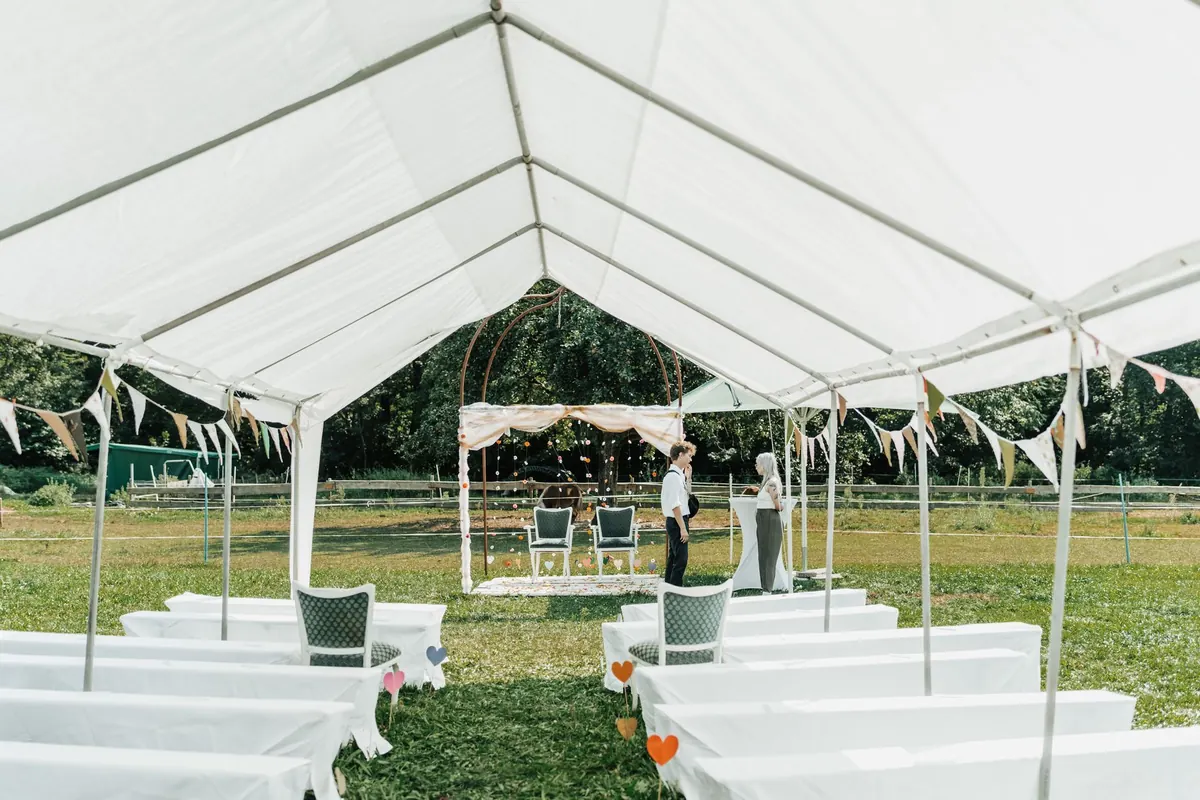
Photo: manfredrichter / Pixabay