Paper Bunting vs. Fabric Bunting: Which Lasts Longer?
The bunting decision usually arrives at an awkward moment: standing in a shop, or squinting at a product photo, trying to work out whether the paper garland in your basket will survive the afternoon. Paper bunting is cheap, cheerful and available in every colour you can name. Fabric bunting costs more, arrives heavier, and somehow ends up in the loft for years. Which one lasts longer isn't a trick question, but the honest answer depends on where you hang it and how you treat it.
What You're Actually Comparing
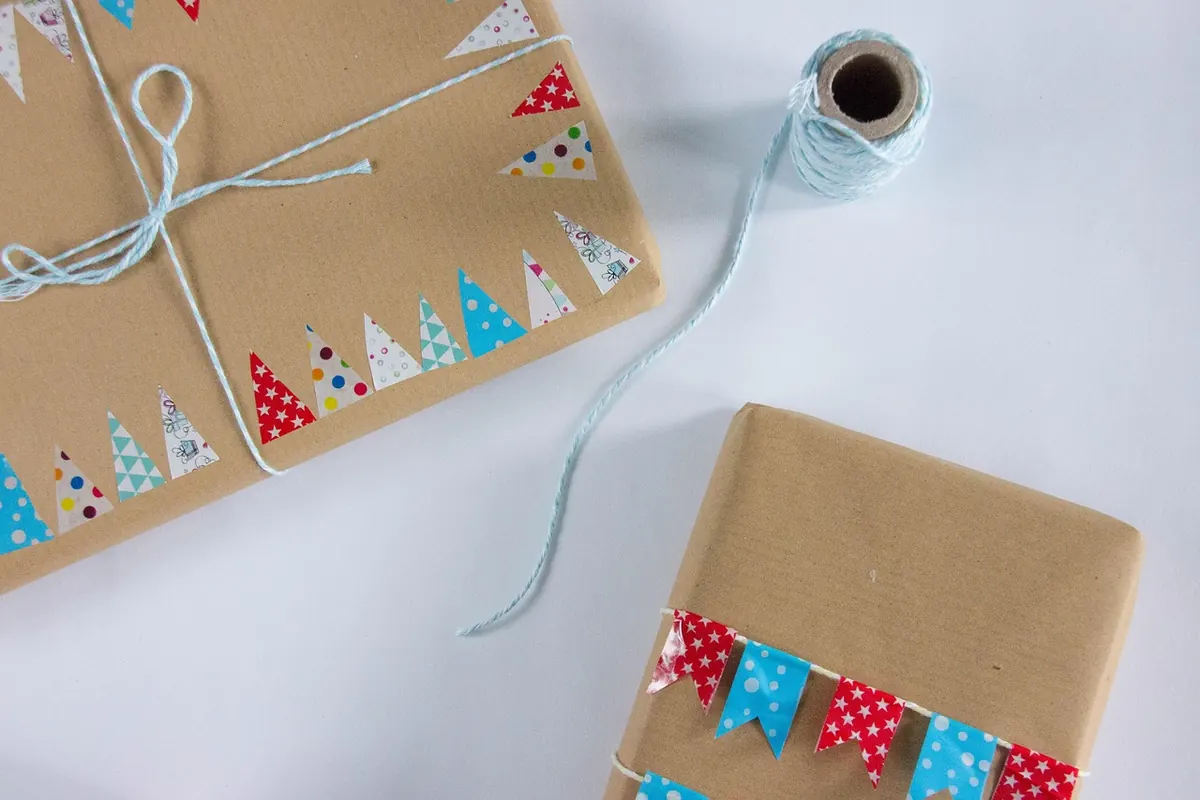
Paper bunting is generally cardstock, tissue or lightweight board, printed on one side and threaded onto twine, ribbon or thin elastic. Cheaper sets staple the string to the back of each flag. Fabric bunting is cut from cotton, calico, cotton-linen blends, felt, or occasionally oilcloth and polyester, then stitched or bonded onto bias binding or tape.
That difference decides almost everything. Paper tears at its weakest point, which is usually the hole where the string passes through. Fabric frays at the edges, but the weave holds, and a fraying edge is cosmetic rather than fatal. A cardstock flag with a reinforced eyelet can outlast several cheaper flags with a bare punched hole.
Durability Indoors
Indoors, good paper bunting isn't the single-use item people assume. Stored flat and handled sensibly, a well-made cardstock garland can come out for five or six parties before it looks tired. It fails in predictable ways: flags curl in humid rooms, creases set in when it's folded badly, and tape or pins leave marks that show when the light catches them.
Fabric indoor bunting doesn't really wear out. Cotton fades slowly near a bright window and can yellow with age, but it washes, presses and goes back in the box. If you're decorating the same room every year, fabric is the only version that behaves like a reusable object rather than a consumable.
What shortens a bunting's life, whatever the material:
- Attachment points. Holes, staples and glue tabs fail long before the flags do.
- Storage conditions. Damp sheds and hot lofts damage both paper and dye.
- Sunlight. UV fades prints and turns paper brittle.
- Handling. Children pulling at a low line do more damage than a whole season of hanging.
- Tension. A line strung tight as a guitar string snaps at the ends; slack lines swing safely.
Weather Resistance
Rain ends the comparison quickly. Paper pulp absorbs water, the print bleeds, and the flags sag into a limp row of rags within minutes. Laminating helps for a light drizzle, but moisture that gets in at the seams stays in. Fabric gets heavy and dark when wet, and non-colourfast cotton can transfer dye onto whatever it touches — but it dries out, and most bunting comes back looking much as it did.
Wind is subtler. Paper flags flap themselves into shreds, especially at the corners. Fabric handles gusts far better, though the weak point simply moves to the tape, and grommets can pull through in a strong gust. If you're hanging anything outdoors, run a continuous binding along the top and tie off every 50-60cm so a single failure doesn't bring the whole line down.
Sun damages both, just at different speeds. Paper left outside for a season goes faded and brittle. Fabric fades too, but the fibres keep working. Polyester and oilcloth are the toughest fabric options and the closest thing to genuinely weatherproof bunting.
Cost Per Use, Not Cost Up Front
Paper always wins at the till; fabric usually wins over a few years. The useful way to think about it is cost per hang. A paper set used twice costs you half its purchase price per party. A fabric set that costs four times as much but comes out for twenty events works out cheaper per event, and it doesn't need replacing the week before the party.
Then there are the small hidden costs: rushed replacements at full price, extra tape and string, and the time spent re-threading flags that have pulled loose. Fabric also usually needs a wash between outdoor uses, which is a cost in effort rather than money.
If you'll hang it more than three times, fabric almost always wins on cost — as long as you actually store it properly.
Reuse Potential and Storage
Both materials reward a bit of care, but they need different handling.
- Paper: take it down gently, don't pull on the flags, and lay it flat in a rigid box with tissue between layers.
- Fabric: shake off debris, spot-clean or hand-wash according to the care label, and dry it completely before storing. Any dampness turns into mildew.
- Both: roll long lengths around a cardboard tube rather than folding them, and label the box by colour or theme so you're not digging through it next year.
- Both: store away from direct sunlight. A shelf inside a cupboard beats a windowsill every time.
Which One Should You Buy?
Match the material to the job rather than to the price tag:
- One-off indoor party, tight budget: paper. It looks good in photos and you won't mourn it afterwards.
- Annual celebration in the same room: fabric, in a colour you won't tire of.
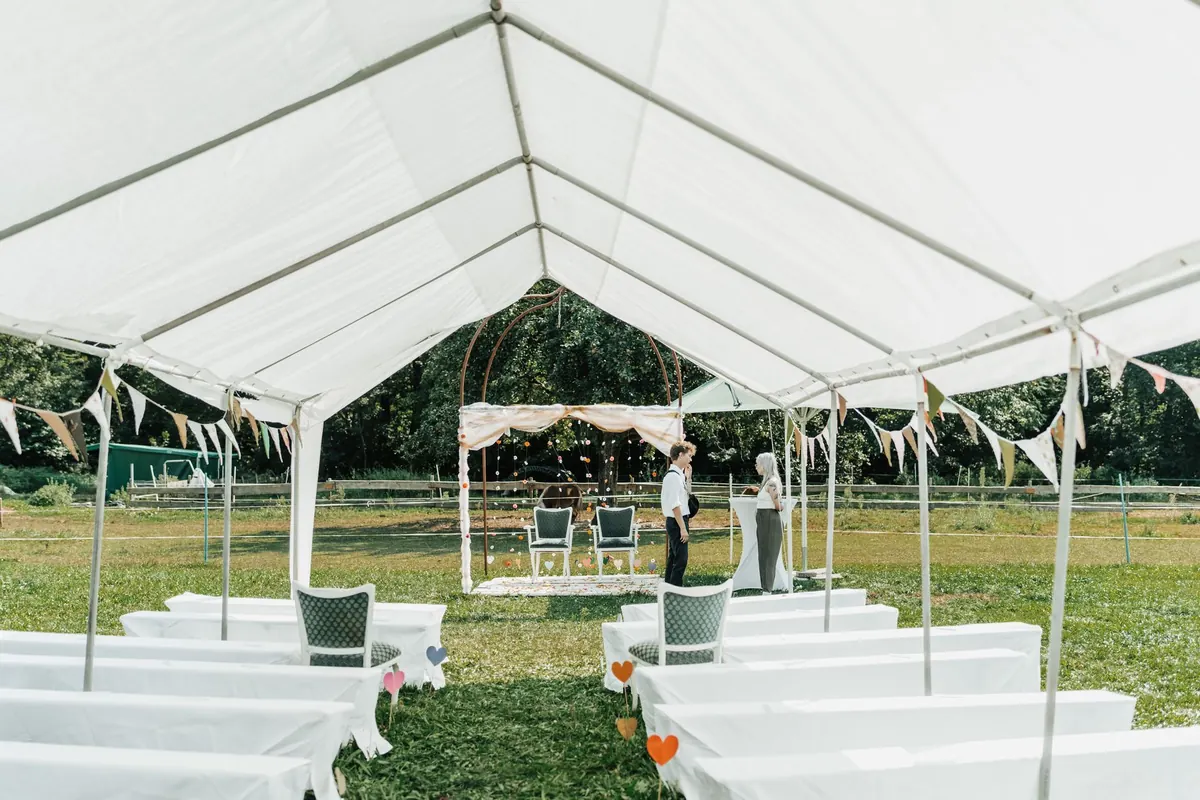
- Garden party or marquee: fabric, ideally polyester or oilcloth, hung with plenty of slack.
- Unpredictable forecast: fabric, or commit to taking paper down the moment the sky darkens.
- Craft table, themed colours, disposable decorations: paper — and let the children help make it.
Making Either Last Longer
A few habits stretch bunting well beyond its expected life. Reinforce the holes on paper flags with a small ring of tape on each side, or punch through a folded strip of card at the top of each flag. Hang lines with a little slack so wind and weight have somewhere to go, and secure long spans at several points rather than just the ends. Take everything down before rain rather than after, and never put bunting away damp.
Finally, decide before you buy how much maintenance you're willing to do. Fabric lasts longer, but only if it gets washed, dried and stored properly. Paper is a short-term decoration, and there's nothing wrong with that — treat it as one and it will still surprise you with a second or third outing.
Photo: Ramdlon / Pixabay